
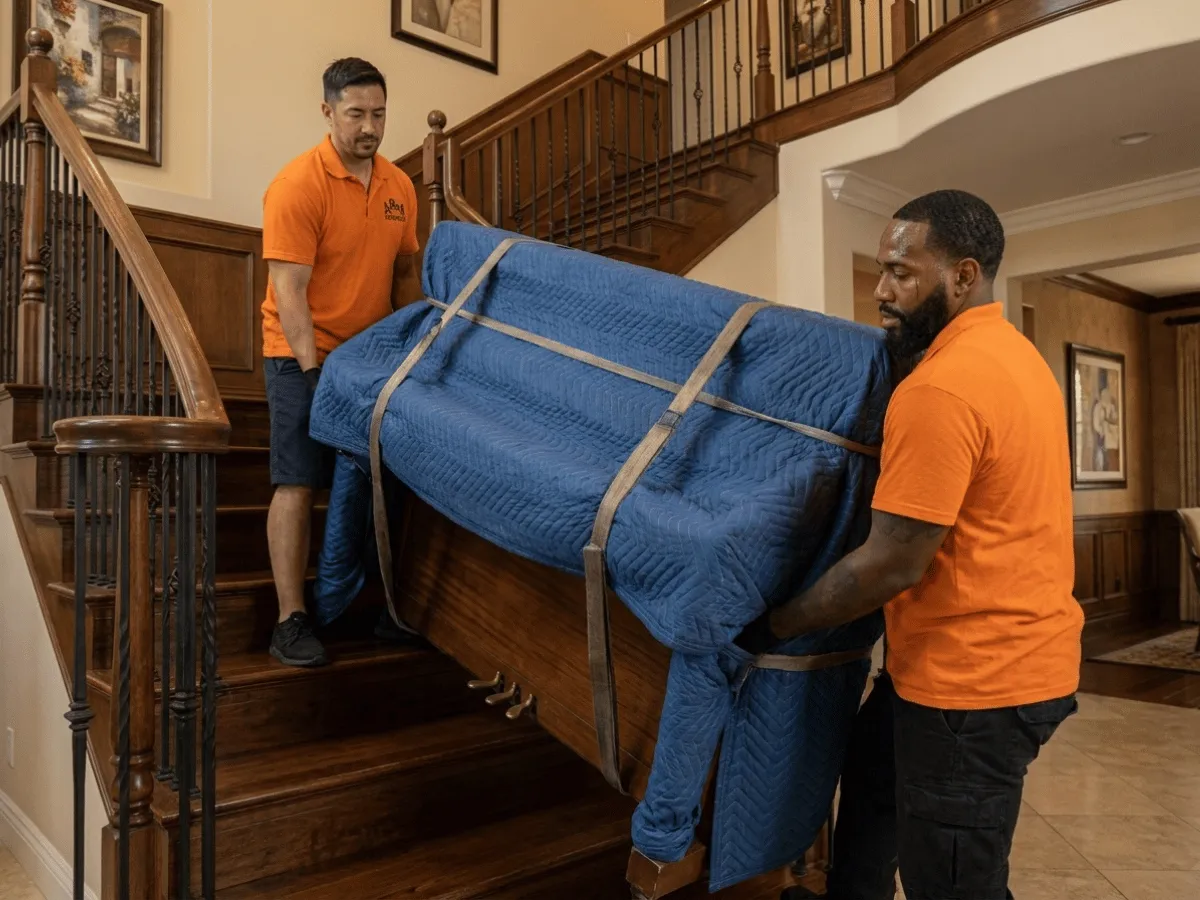
After thousands of Orange County moves, we can tell you exactly where breakage comes from — and it’s almost never the truck. It’s flat-stacked plates, glasses laid sideways, half-empty boxes, and TVs traveling flat. All preventable, all before the first item is loaded.
Here is the fragile-packing system our professional packing crews use daily, written so you can replicate it at your kitchen table.
Materials first — technique can’t save bad boxes
The uncomfortable truth: wrapping skill matters less than what you wrap with. The professional kit is short and non-negotiable:
- Dish-pack (double-walled) boxes for anything ceramic or glass — the walls absorb what thin boxes transmit.
- Unprinted packing paper — newspaper ink stains china and fabric.
- Bubble wrap for electronics and art, paper for dishes (bubble against ceramic traps vibration; paper dampens it).
- Cell dividers for stemware, quality tape, and a marker bold enough to write FRAGILE on all four sides — because side labels are the ones a loading crew actually sees.
Plates, bowls, and the vertical rule
Wrap each plate individually: corner of the paper over the center, fold the sides in, roll and tuck. Then the rule that separates professionals from everyone else: plates stand vertically, like records in a crate. A flat stack concentrates road vibration into the bottom plate; vertical plates flex with it.
Build the box in layers — three inches of crushed paper at the base, a row of vertical plates, crushed paper, repeat. Finish with a paper cushion before closing. The test is simple: shake gently. Any sound means more paper.
Glasses and stemware: protect from the inside
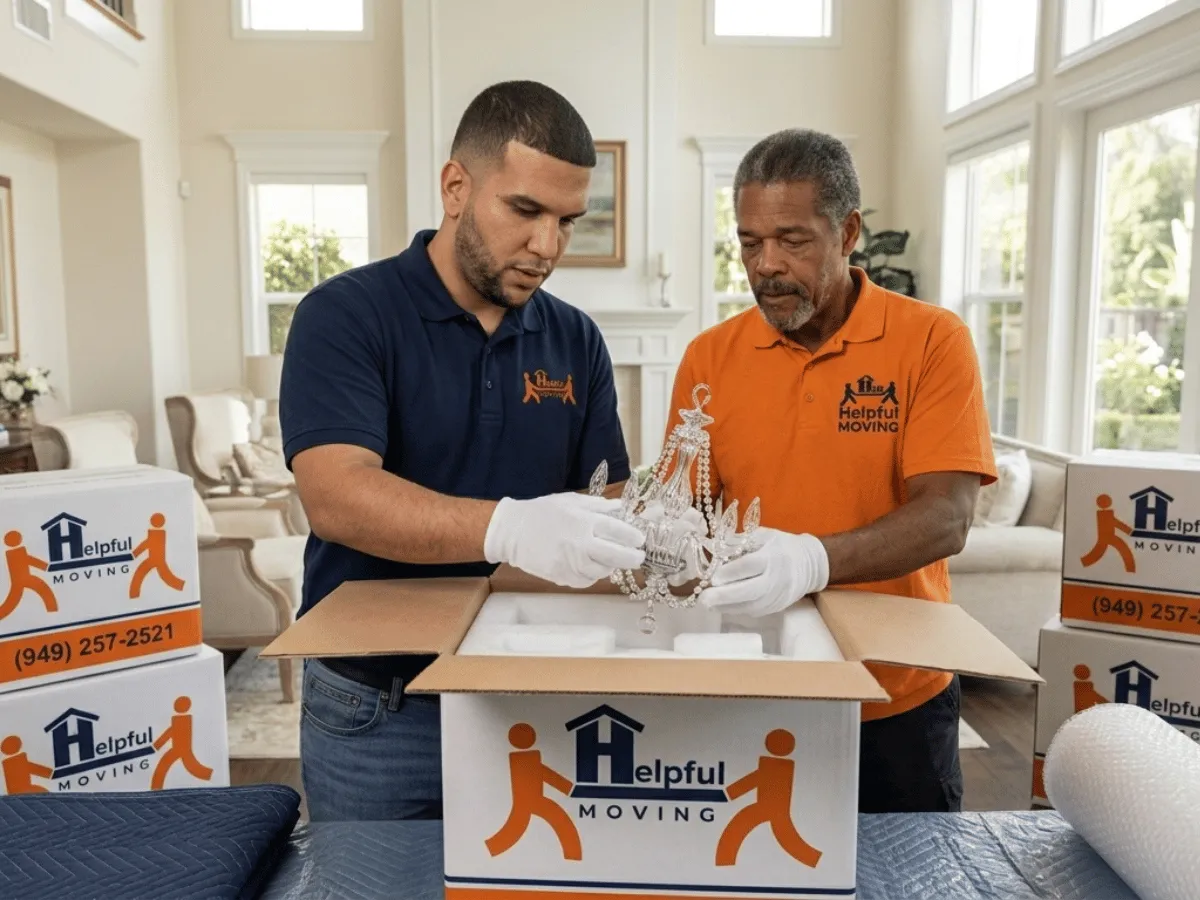
Glass fails from the inside out. Crumple paper into each glass first, wrap stems separately on wine glasses, then wrap the whole piece and load upright in a cell-divider box. Never on the side — stemware handles top-down weight far better than side pressure. Heaviest glasses on the bottom row, lightest crystal up top.
TVs, art, and mirrors: the on-edge rule
Everything flat and fragile travels on edge, never laid down. Screens and glass crack from sustained vibration when flat — not from the bump you’re picturing.
For TVs: photograph the cable setup, remove the base, add foam corner protectors, and use a flat-panel carton. For framed art and mirrors: painter’s-tape X across the glass, corner protectors, bubble wrap, then a picture box. On the truck, all of it rides vertically between soft surfaces — a mattress is the best neighbor a mirror ever had. For pieces too valuable for cartons, our white-glove service builds custom crates.
The five mistakes behind almost every broken box
When a client shows us breakage from a previous DIY move, the cause is nearly always on this list:
- Half-empty boxes. Air is the enemy — contents shift, walls crush. Every gap gets crushed paper until the box is snug.
- Overweight boxes. Books go in small boxes, dishes in medium dish-packs. A box a healthy adult can’t lift comfortably is a box that gets dropped.
- Flat-stacked plates. Covered above, worth repeating — it’s the single most common cause of china breakage in America.
- Tape rationing. One strip across the bottom seam is a bet, not a seal. Three strips, H-pattern, top and bottom.
- Labeling the top only. Boxes get stacked. Sides get seen. FRAGILE and the destination room go on all four sides, every time.
Pack on a timeline, not in a panic
Fragile packing fails when it’s rushed, so schedule it the way crews do: three weeks out, pack the china cabinet and everything decorative — you won’t host a dinner party mid-move. Two weeks out, artwork, mirrors, books, and the kitchen items you don’t touch daily. Final week, everyday dishes and glasses, one cabinet per evening. Move-day morning, nothing fragile — if you’re wrapping stemware while the truck idles outside, the system already failed. The full schedule, with every non-fragile task slotted in, lives in our 8-week moving checklist.
Heirlooms, and knowing when to hand it off
For irreplaceable items — china passed down three generations, sculpture, anything you’d grieve — double-box: wrapped item in a snug box, that box floating in three inches of cushioning inside a larger one. And consider the honest calculus our clients land on: professionally packed items carry different liability coverage than owner-packed boxes, the materials come included, and a crew does the whole kitchen in hours instead of days. That math is why “you pack the closets, we pack the glass” is our most popular arrangement across Mission Viejo, Irvine, and the rest of Orange County.
Start early either way — fragile packing is the slowest part of any move. The 8-week checklist schedules it for you, and if you’d rather hand the whole thing off, call (949) 257-2521 for a packing quote in under three minutes.
Frequently asked questions
What is the best way to pack dishes for moving?
Wrap each plate individually in packing paper, then stand plates vertically in a dish-pack box — like records in a crate, never stacked flat. Layer crushed paper at the bottom, between rows, and on top so nothing shifts. A properly packed dish box should make no sound when gently shaken.
Should I use newspaper to wrap fragile items?
Avoid it for anything that matters. Newspaper ink transfers onto china, porcelain, and fabric, adding cleanup or permanent staining. Unprinted packing paper costs a few dollars more per bundle and is what professional crews use for every wrapped item.
How do professional movers pack wine glasses and stemware?
Stuff each glass with crumpled paper, wrap the stem separately, then wrap the whole glass and place it upright — never on its side — in a cell-divider box. Stemware breaks from side pressure and interior vibration; the paper inside the bowl is the step most people skip.
How should I pack a TV for moving without the original box?
Use a flat-panel TV carton with foam corner protectors, photograph the cable setup first, and keep the screen vertical for the entire move — flat-laid screens crack from vibration, not impact. On the truck, TVs ride on edge between soft furniture like mattresses or wrapped sofas.
Is professional packing worth the cost?
For fragile-heavy homes, usually yes. Professional packing includes all materials, moves faster than DIY by days, and shifts liability — items a crew packs are covered differently than owner-packed boxes if something goes wrong. Many clients split it: they pack clothes and books, we pack the kitchen, art, and glass.